
Toyota R&D

WALKING TRAIL

LmabP_logo.png

WELCOME

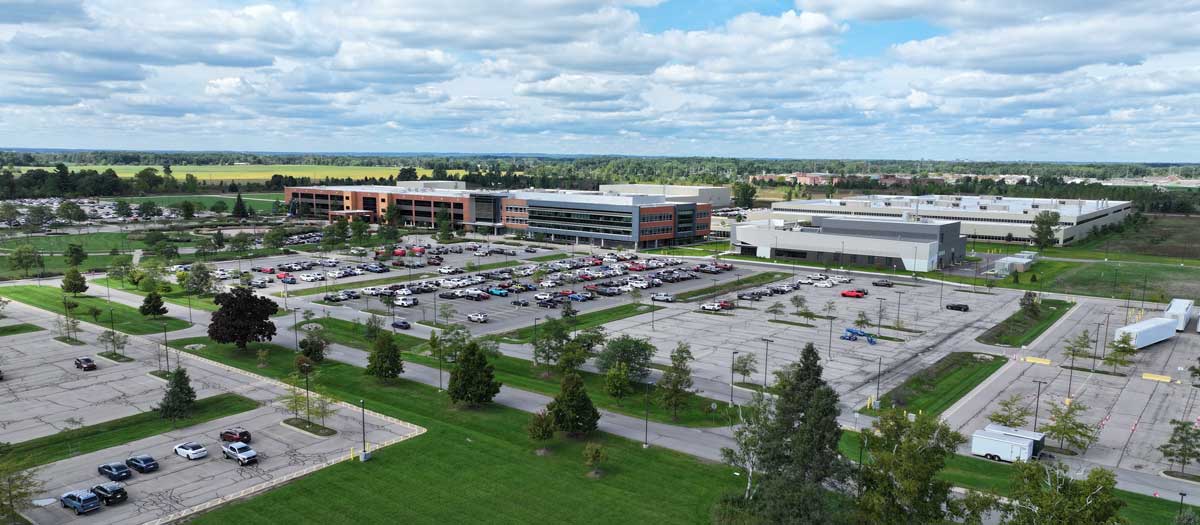
Our Walking Trail is a living example of Toyota R&D’s ongoing efforts to support the unique balance of native plants, animals, and ecosystems here in Michigan.

DJI_20260918144132_0121_D

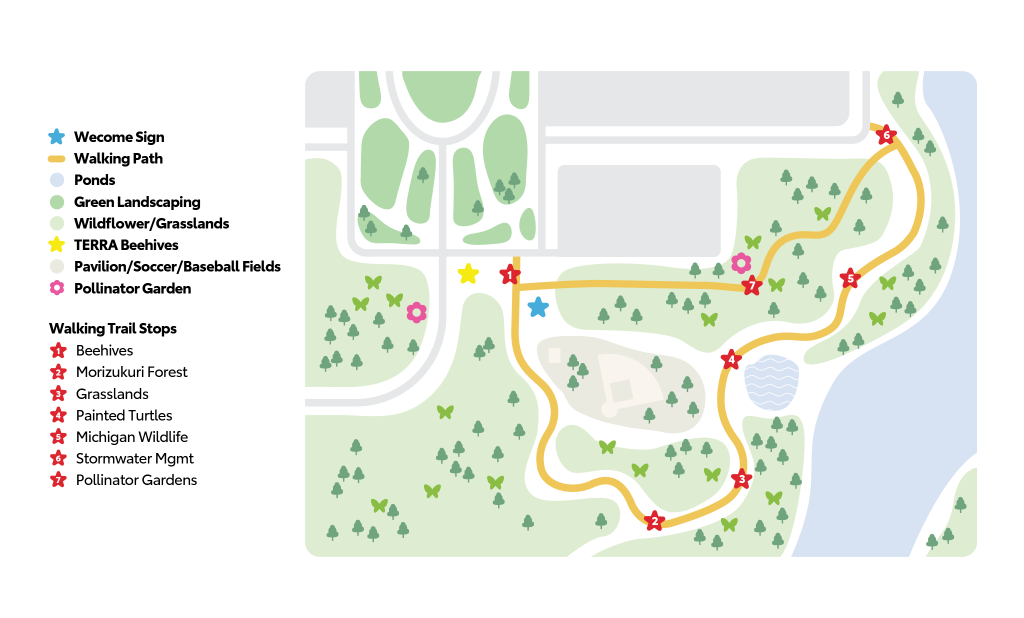
Explore our trail that currently covers about 0.8 miles
from start to finish

Our Amazing Honeybees

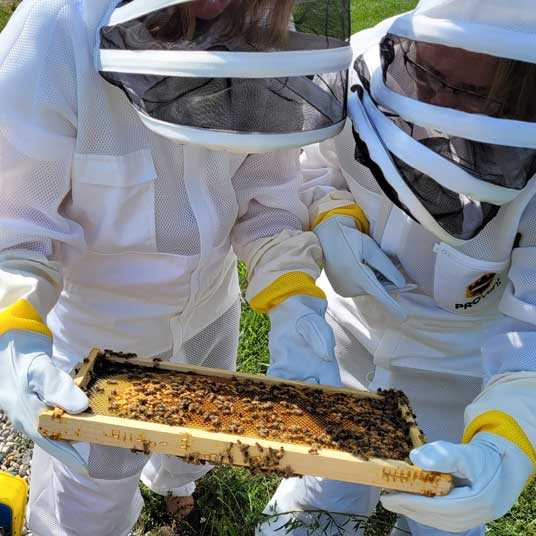
In 2022, Toyota Environmental and TERRA installed our apiaries that are home to an average of 50,000 to 100K bees.

By hosting these hives, we’re doing more than creating a home for pollinators—we’re helping protect and strengthen their populations. Come see the vital role bees play firsthand and discover simple ways you can help support these essential pollinators.

Morizukuri Forest

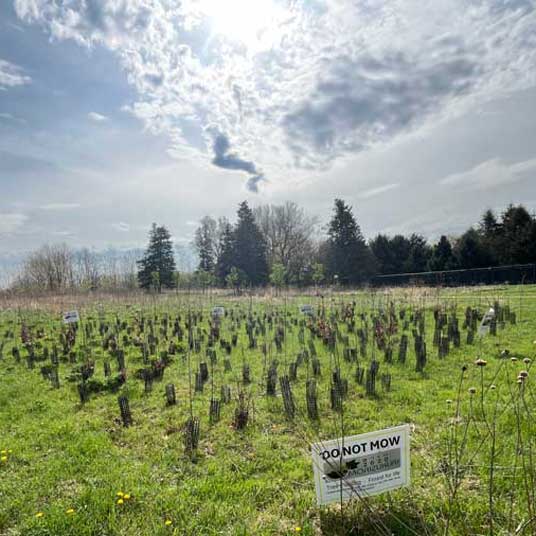
In 2019, Toyota Motor Corporation requested all global locations to participate in Morizukuri Tree Planting in celebration of the 2020 Tokyo Olympic and Paralympic Summer Games as a way to help achieve Challenge 6 in the Toyota 2050 Environmental Challenge. On November 5th 2020 volunteers planted a variety of 400 native trees using Dr. Akira Miyawaki method of planting, which requires that 3 small trees be planted per square meter or yard (high density). This proven method promotes biodiversity and faster tree growth rates. The trees were placed within 135 sq. yard area to minimize tree loss and promote growth.

The goal of this activity was to spread the culture of Morizukuri by expanding and growing forested land, recreating ecosystems, restoring biodiversity, and protecting the land. The project conservation objective is to establish a resilient “pocket forest” by planting a diverse mix of native trees that enhances local biodiversity, improves habitat connectivity, supports native wildlife, and contributes to ecosystem services such as carbon sequestration, soil stabilization, and water regulation onsite.

Michigan Wildlife

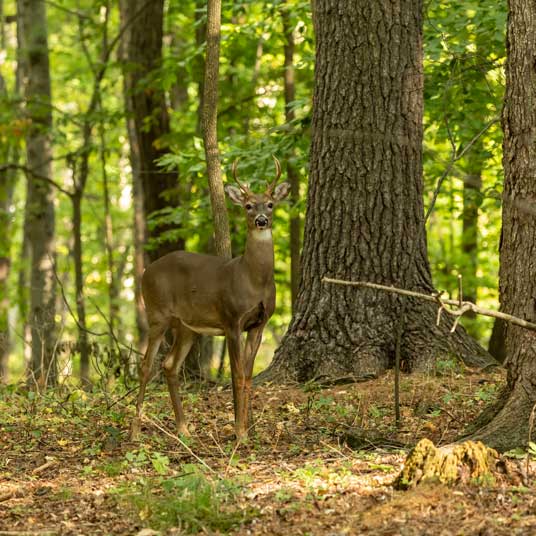
R&D’s Walking Trail will give you a glimpse into the amazing wildlife that can be found in Michigan.

Here are some fun facts about wildlife that can be found in natural habitats all across our great  state:

  • Monarch butterflies migrate through Michigan. Some travel thousands of miles between North America and their wintering grounds in Mexico.
  • Moose are Michigan’s largest land mammals. They can weigh well over 1,000 pounds and are especially associated with the Upper Peninsula.
  • Some Michigan turtles can breathe through their skin! Certain turtle species can absorb oxygen through specialized skin, while spending long periods underwater.
  • River otters can close their ears and noses underwater. Their streamlined bodies and webbed feet make them excellent swimmers.
  • Bald eagles love Michigan’s lakes and rivers. Their excellent eyesight helps them spot fish from high above the water.

Toyota R&D’s Indicator Species

Keeping ecosystems healthy is key to protecting biodiversity.

In nature, everything is connected. When one plant or animal suffers, the entire ecosystem is affected. Scientists are able to observe these ecological imbalances through indicator species!

Toyota partnered with the Wildlife Habitat Council ® (WHC) to select indicator species for all locations across North America. 

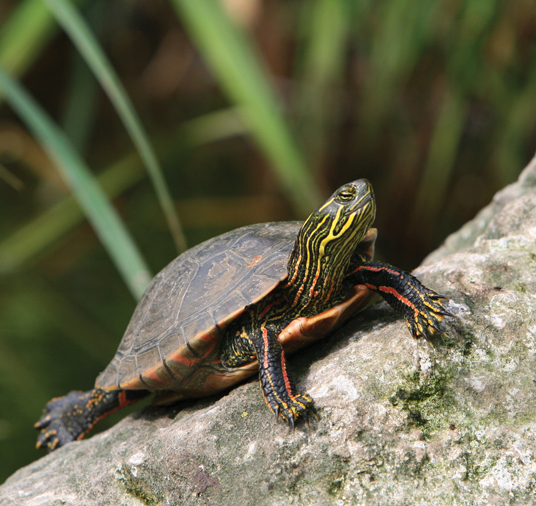
Toyota R&D has selected the Painted Turtle as our indicator species. Which also happens to be Michigan’s official state reptile! 

See if you can spot one along the Walking Trail!

Pollinator Gardens

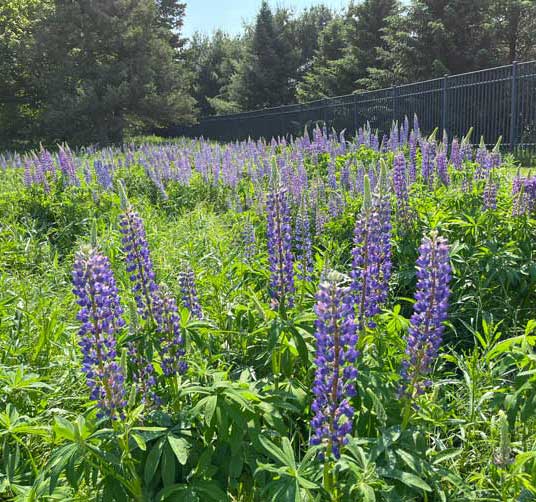
Toyota Motor North America (TMNA) set a goal in 2022 to enhance 26,000 acres of pollinator habitat by 2026. We ended up surpassing that goal and enhancing 31,235 acres of pollinator habitat across North America, including at our R&D Michigan sites.

Click the links below to learn more about this commitment. 

Toyota team members across North America participate in species protection projects as part of Wildlife Habitat Council® (WHC) certification programs. WHC helps us evaluate animal species on our sites and identify appropriate habitat creation and enhancement projects.